



• When the World Is Too Much
    How a Neurodivergent Nervous System Experiences Stress

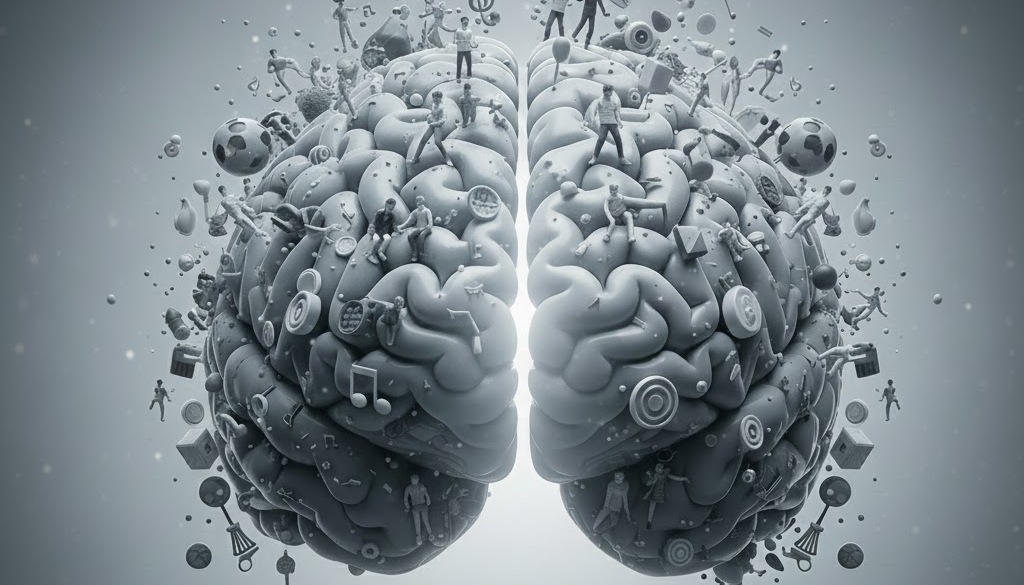
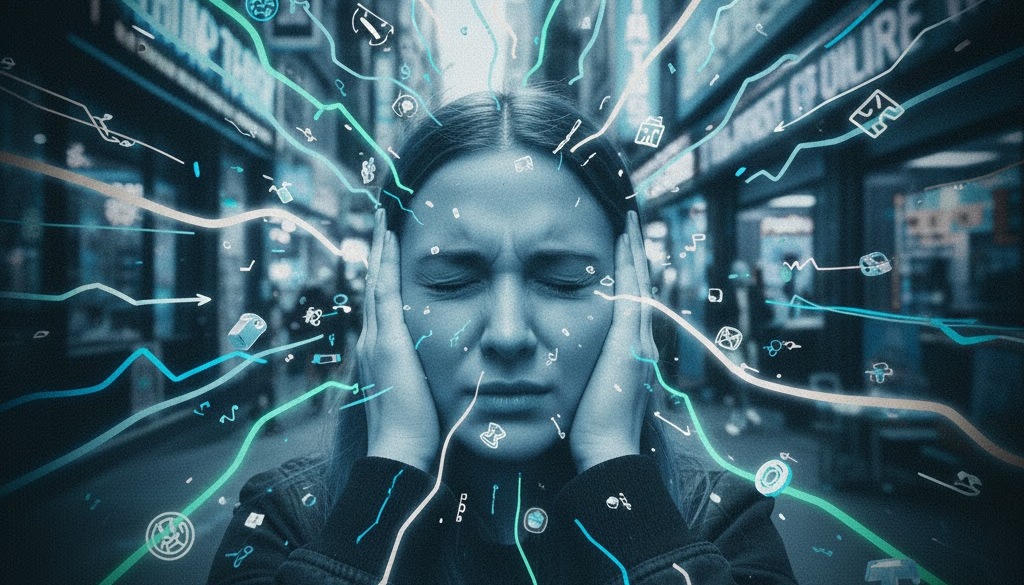
    There are days when the world doesn’t just feel busy or loud – it feels like too much. For many neurodivergent people, this isn’t a sign of weakness or “being too sensitive”. It reflects real differences in how their nervous system senses, filters, and responds to life.

    Neurodiversity appears across many experiences – including neurodevelopmental conditions, acquired neurological conditions, and mental health conditions. These are not deficits in character. They are variations in brain architecture, chemistry, and connectivity that shape how a person experiences the world.

    (more…)

  • Neurodiversity: The Science of Being Human
    …in Many Beautiful Ways

    For some people, the word neurodiversity sounds abstract – almost academic. But at its core, it simply means this: human brains are not built from the same blueprint. They are shaped by different networks, rhythms, sensitivities, and developmental paths.
    And those differences are not flaws. They are expressions of biological diversity.

    (more…)
  • What I Wish I Knew at the Beginning of My Recovery

    When a neurological event changes your life, no one hands you a map.
    You wake up in a different body, a different mind, a different emotional landscape – and somehow you’re expected to navigate it while still grieving who you used to be.

    (more…)
  • The Identity Shift After Neurological Change
    Who Am I Now?

    Neurological change doesn’t just alter how the brain functions – it reshapes the sense of self.
    When an injury, stroke, or medical event reorganizes neural pathways, the transformation is not merely cognitive.
    It is psychological, emotional, relational, and existential.

    (more…)
  • The Day My Brain Changed
    What No One Told Me About Becoming a Different Version of Myself

    I believed in science with my whole being.
    I believed in medicine, in skilled hands, in protocols and knowledge and sterile rooms that smelled like safety. I believed that when you entrust your life to a neurosurgeon, you are carried – held inside a system built on precision.

    And yet on the morning of my AVM embolization, my body betrayed the story my mind insisted on. I was trembling. Not from cold.
    From something deeper – a primal, intuitive fear I couldn’t rationalize away.

    (more…)
  • What Makes a Brain “Different”?

    A Strength-Based Look at Neurodiversity

    There is no single way to be human – and there is no single way for a brain to work.

    Some minds move quickly, some move with depth. Some notice tiny details others miss. Some feel the world intensely. Some generate ideas in bursts. Some struggle with sensory overload or executive functioning but excel in creativity or pattern recognition.

    Neurodiversity simply describes this natural variation.
    It is not a flaw. It is not a disorder. It is part of the human landscape.

    Yet for so many people – those who are neurodivergent from birth, and those whose brains changed through injury, trauma, illness, or life events – feeling “different” often carries years of shame, misunderstanding, or exhaustion from trying to fit into a world built for only one cognitive style.

    Today, I want to offer a different lens.

    (more…)
  • Why Cognitive Fatigue Isn’t Laziness
    Your Brain’s Energy

    If you’ve ever felt mentally exhausted after what seems like a “normal” day – even if to others around you seem fine – you’re not imagining it. And you’re not weak, unmotivated, or lazy. Cognitive fatigue is real, measurable, and deeply tied to how the brain manages its energy.

    For neurodivergent people and those living with brain injuries, this experience can be especially intense. Tasks that appear simple from the outside – answering messages, making decisions, switching between activities, maintaining focus – can drain the brain much faster and much deeper than most people realize.

    But why does this happen?

    (more…)
  • What It Really Means to Be “Mindly Different”

    Why I Created Mindly Different

    For as long as I can remember, stories about people whose minds worked differently captivated me. Even as a child, I felt drawn to understand the inner worlds of those who thought, felt, or processed life in ways that weren’t considered “typical”. I didn’t have the vocabulary for it yet, but I knew there was something profoundly meaningful in the diversity of human minds.

    I remember my childhood friend who hardly spoke – often silent, sometimes barely articulate – except when he talked about the Second World War. Then, suddenly, he transformed into a living archive, reciting names, dates, geographic details, and statistics with astonishing precision. Or our neighbor, a brilliant mathematician from a major university in Saint-Petersburg, who self-medicated simply to quiet the unstoppable flow of equations racing through his mind. Over time I read about people tortured by lobotomy and met people with memory loss, individuals living with TBI and PTSD, and others who carried extraordinary gifts – musical prodigies, scientific thinkers, people with uncanny intuition.

    These experiences showed me early on that the human mind can be both fragile and extraordinary, complex and beautiful, vulnerable and powerful all at once.

    (more…)