





Holidays are often described as a time of joy, connection, and celebration. For many families, they come with traditions, expectations, and emotional meaning. But for people with neurodivergent nervous systems – whether innate or acquired – the holidays can also be deeply taxing.
If someone you love becomes quieter, leaves early, seems irritable, withdrawn, overwhelmed, or “not themselves” during holiday gatherings, this is not a lack of love or appreciation.
It is often a nervous system doing its best under intense load.
Understanding the Neurobiology Behind Holiday Overwhelm
Neurodivergent brains – including those shaped by neurodevelopmental conditions, mental health conditions, acquired neurological changes (such as brain injury, stroke, concussion), trauma, chronic stress, or hormonal transitions – often process sensory and emotional input more intensely and recover more slowly.
During the holidays, several factors combine to overload these systems:
- increased noise and overlapping conversations
- bright lights and visual clutter
- unpredictable schedules and social demands
- emotional expectations and family dynamics
- pressure to participate “normally”
From a neuroscience perspective, this means higher activation of stress-related circuits (including the amygdala and autonomic nervous system), increased metabolic demand on attention and regulation networks, and reduced capacity to filter stimulation.
What may feel festive to one person can feel neurologically overwhelming to another.
What Overload Can Look Like (And Why It’s Often Misunderstood)
A neurodivergent loved one may:
- leave gatherings earlier than expected
- need frequent breaks or quiet spaces
- struggle to follow conversations
- appear irritable, flat, or emotionally distant
- avoid certain activities that are usually “fun”
- need more sleep or recovery time afterward
These are not signs of rejection, rudeness, or lack of effort. They are signs of sensory, cognitive, or emotional overload. Importantly, overload is often invisible. A person may look “fine” while their nervous system is under significant strain.
Why “Just Push Through” Doesn”t Help
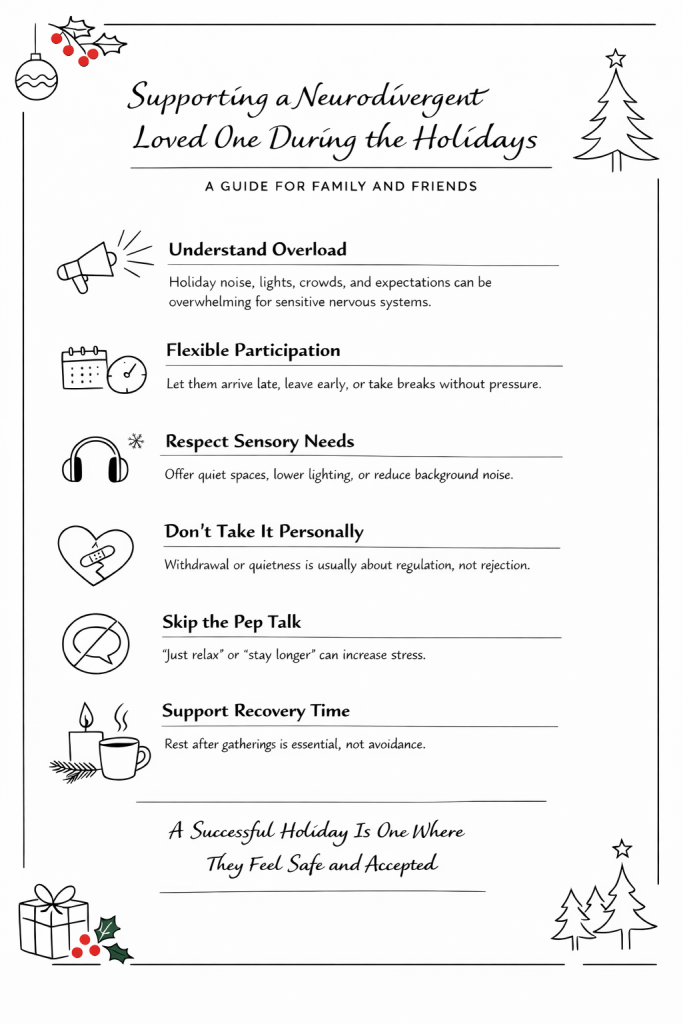
Well-meaning encouragement to “get used to it”, “just to relax”, or “stay a little longer” can unintentionally increase stress.
As I said in my previous post, forced endurance increases allostatic load – the cumulative burden placed on the nervous system when it is pushed beyond its capacity. Over time, this can worsen fatigue, emotional dysregulation, pain, migraines, shutdowns, or burnout.
Support comes not from pushing harder, but from reducing unnecessary strain.
How You Can Offer Real Support
You don’t need to fully understand neurobiology to be supportive. Small, respectful adjustments make a profound difference.
Here are some ways to help:
- Normalize flexible participation
Allow your loved one to come late, leave early, or skip events without guilt or explanation. - Respect sensory needs
Be open to quieter spaces, dimmer lighting, or reduced background noise when possible. - Accept parallel presence
Sitting quietly, helping in the kitchen, or observing without conversation is still connection. - Avoid taking it personally
Withdrawal is often regulation, not rejection. - Don’t pressure emotional performance
They may feel grateful, loving, and connected even if they don’t express it in expected ways. - Support recovery time
Understand that rest after gatherings is part of participation, not avoidance.
Redefining a “Successful” Holiday
A successful holiday is not measured by how long everyone stayed at the table or how much was endured.
A successful holiday is one where:
- nervous systems felt safe enough
- boundaries were respected
- connection didn’t require self-abandonment
For neurodivergent people, being allowed to show up as they are – without pressure to mask or perform – is one of the greatest gifts a family can offer.
A Final Thought for Loved Ones
If someone you care about navigates the holidays differently, it doesn’t mean they are difficult, ungrateful, or distant.
It means their brain processes the world with high sensitivity and accuracy.
Your patience, flexibility, and understanding don’t just make the holidays easier – they support long-term wellbeing, trust, and genuine connection.
Sometimes, love looks like letting someone rest.
By Nataliya Popova
Mindly Different – Coaching for the beautifully different mind
 Mindly Different
Leave a comment